Demystifying RESTful APIs: Your Gateway to Modern Web Development

Demystifying RESTful APIs: Your Gateway to Modern Web Development
RESTful API, or Representational State Transfer API, serves as the backbone of modern web applications, acting as a virtual file cabinet that stores and manages data on the vast expanse of the internet. Understanding how RESTful APIs work is fundamental for developers and businesses looking to harness the power of the web.
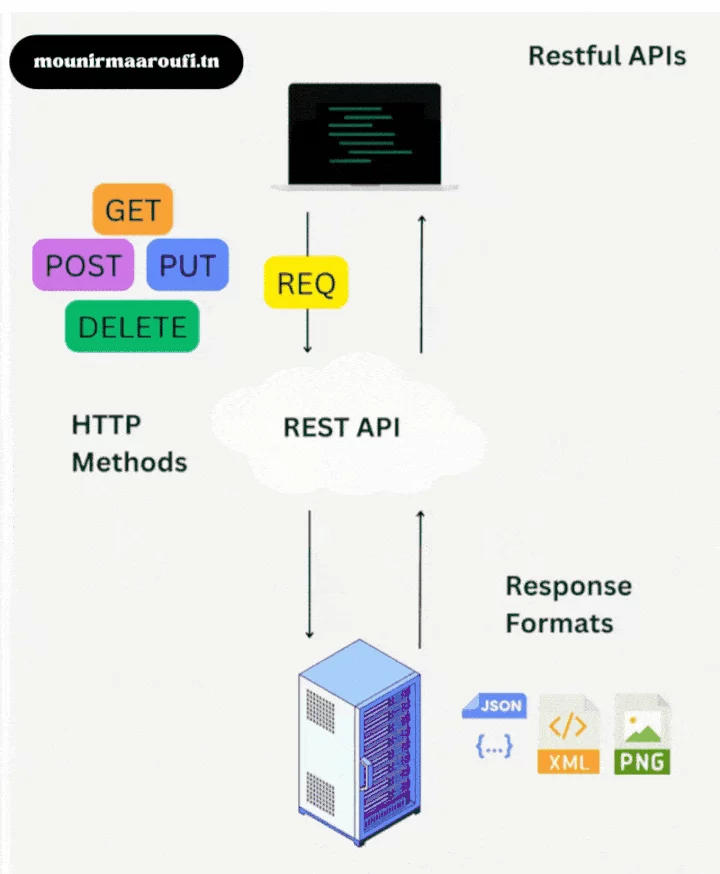
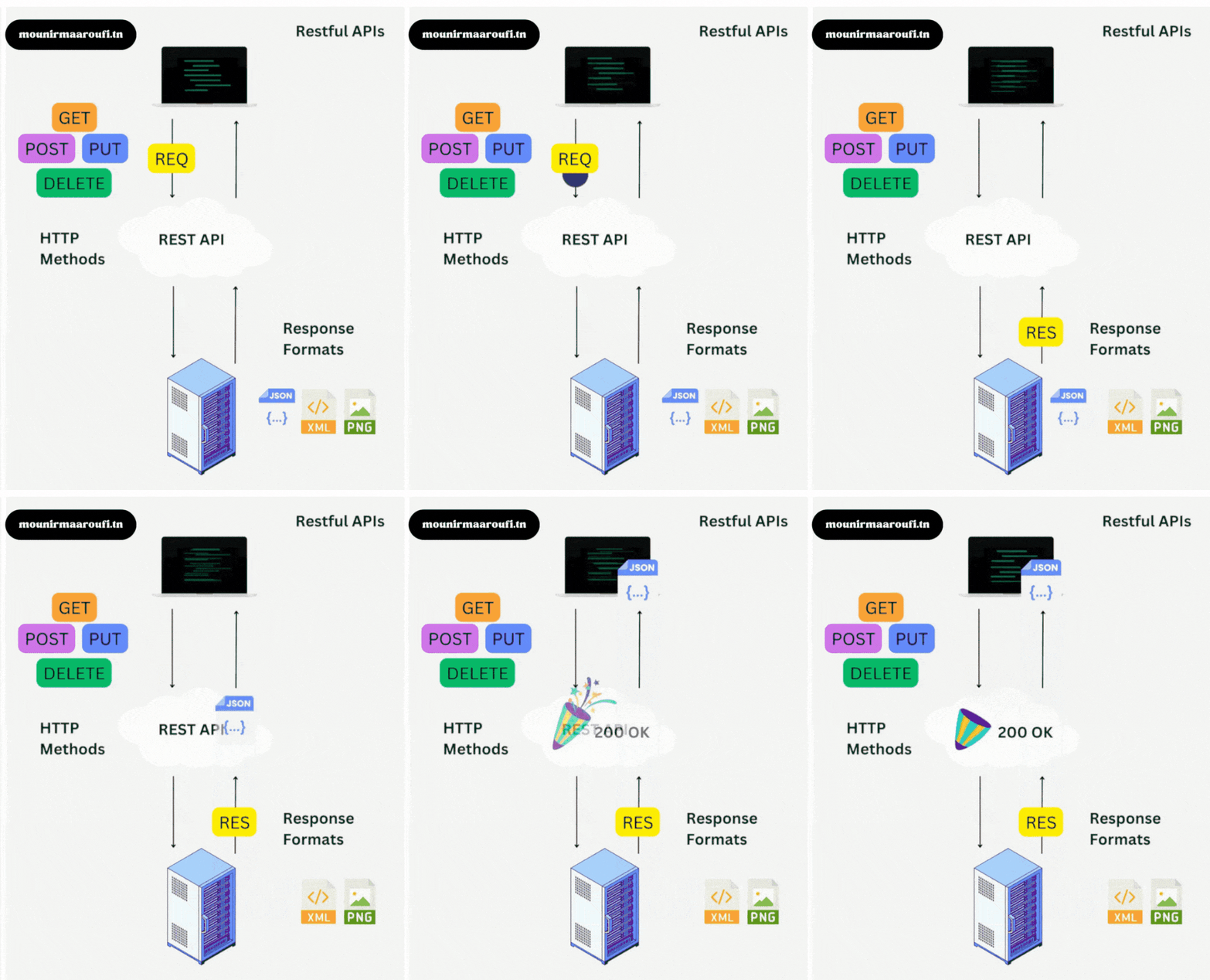
🔗 REST, short for Representational State Transfer, employs standard HTTP methods to interact with data. Let’s break down these methods to help you grasp their significance:
✅ GET: 📥 Retrieving Data (Read)
- Let’s say you want to retrieve information about users from your website. You’d send a GET request like this:
- GET
https://www.mounirmaaroufi.com/users
✏️ POST: 📝 Creating New Data (Create)
To add new data, like a blog post, you’d use a POST request:
- POST
https://www.mounirmaaroufi.com/blog
✏️ PUT: 🔄Update existing data (Update)
For updating data, such as editing a blog post, the PUT request is used:
- PUT
https://www.mounirmaaroufi.com/blog/{blog_id}
When it’s time to remove data, like deleting a blog post, a DELETE request is employed:
- DELETE
https://www.mounirmaaroufi.com/blog/{blog_id}
À lire aussi

Concevoir une architecture microservices avec Laravel et Docker
Découper une application Laravel monolithique en microservices n'est pas toujours la bonne réponse. Principes, apports de Docker et pièges à éviter.

PHP 8.3 : les nouveautés qui comptent pour les développeurs Laravel
PHP 8.3 apporte plusieurs évolutions utiles au quotidien pour un développeur Laravel : constantes typées, readonly amélioré, nouvelles fonctions. Ce qu'il faut retenir.

Redis : cache, sessions et files d’attente dans Laravel
Redis est l'un des outils les plus utilisés pour accélérer une application Laravel : cache, sessions, files d'attente. Tour d'horizon de ses usages concrets.